
Sardis Criminal History Checks
Start with the paper in hand. An incident number or officer name points to Sardis Police. A citation points to the Municipal Court clerk. Booking paperwork points to Burke County Jail and should name the arresting agency. When a prosecutor files a county misdemeanor or felony, the Burke clerk becomes the source for the docket and outcome. These records describe different stages, so one missing result does not settle the full search.
- Call Sardis Police about a city officer's incident or arrest report.
- Send a narrow request through City Hall when no form is available.
- Ask the municipal clerk for the citation docket and final action.
- Check Burke jail and courts after custody or county filing.
- Use GCIC procedures for an official statewide self-review.
Write down each incident, booking, citation, and case number. Compare dates and charges rather than relying on names alone. The charge listed at intake can change after prosecutor review, and a payment record may reveal less than the signed judgment. The Burke County record overview supplies more detail on county and state layers.
Two Sardis Record Counters
Sardis Police is published at 909 Charles Perry Avenue, while City Hall and the municipal court route are at 713 Charles Perry Avenue. The short distance can obscure an important records rule: the police department creates the incident narrative, and the municipal clerk maintains citation and court material. Asking the wrong counter for a record it never made can slow the response.
Describe the record, not just the person. A date range, location, incident or citation number, and officer or court name can reduce false matches. If the matter crossed from city to county, ask each office only for its own layer.
Records at the Sardis Police Department
Sardis Police is at 909 Charles Perry Avenue, Sardis, Georgia, with a published phone number of 478-569-4311. No official report-request form, records email, public blotter, fee schedule, or counter hours were verified. Call before sending a request and ask which official currently acts as records custodian, what delivery channels are accepted, and whether identification or prepayment applies.
The official Sardis emergency-services page publishes the city police contact along with Burke sheriff and State Patrol routes.
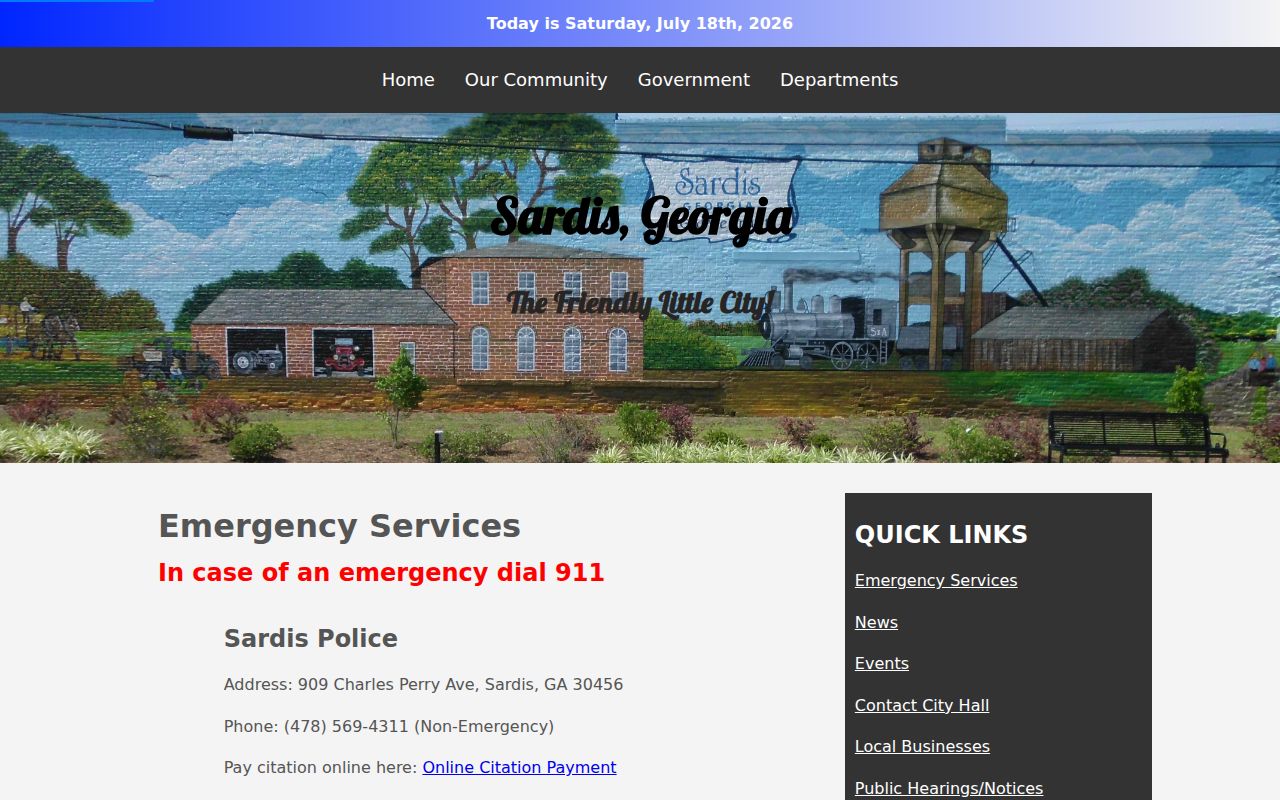
Those agency listings are useful because a Sardis-area event may have been handled by city police, a Burke deputy, or a Georgia State Patrol trooper. The badge or agency on a citation controls where the original report lives. Do not assume a Sardis address proves that Sardis Police created the record.
Sardis Traffic Record Custodians
At least three law-enforcement channels may create a traffic or arrest record in the Sardis area. Sardis Police holds reports written by its officers. Burke County Sheriff's Office holds deputy-created material and operates the county jail route. Georgia State Patrol holds trooper reports through the proper post or state process. The city's emergency page lists these contacts together, but that list is not a shared database.
Use the citation header, incident number, uniform patch, or booking paperwork to identify the agency. If none is available, call the jail after a custodial arrest and ask for the arresting agency. For a crash, request the crash report from the investigating agency through the official Georgia route. City Hall cannot produce a trooper report, and State Patrol cannot certify a Sardis Municipal Court judgment.
Booking and Arrest Records in Sardis
No official Sardis city jail or city booking roster was found. A custodial arrest routes practically to Burke County Jail at 225 Highway 24 South, Waynesboro, 706-554-2133. A citation does not always involve booking, so first determine whether the person was taken into custody. If so, ask the jail for booking number, intake and release dates, bond by charge, arresting agency, facility status, and court routing.
Then request the arrest narrative from the agency that made the arrest. Once charges are filed, the court docket becomes the best source for the formal charge and disposition. The Burke County arrest search explains that wider chain. No official live Burke roster was verified, so a phone call and precise records request are safer than an unofficial mugshot page.
Booking records document custody, not guilt. They may retain an officer's initial charge after a prosecutor files a different accusation, dismisses a count, or seeks a felony indictment. Use the court case number and signed final order to resolve that difference.
Sardis City Hall Records
Sardis City Hall is at 713 Charles Perry Avenue. The published mailing address is P.O. Box 398, Sardis, Georgia, the phone is 478-569-4315, and the fax is 478-569-9009. With no posted request form or records email, a caller can confirm whether mail, fax, or counter delivery is preferred. Ask about fees and format before the city begins a broad search.
The official Sardis City Hall page verifies the municipal contact channels.
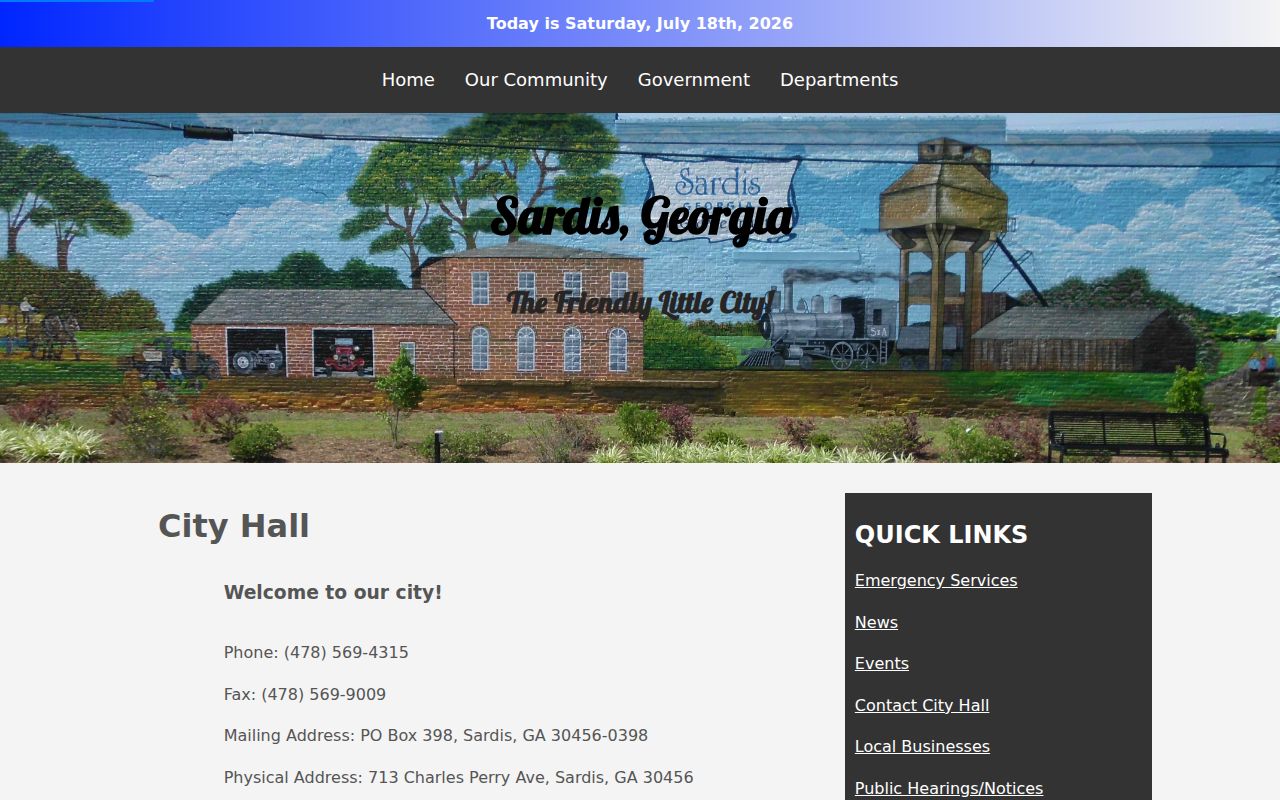
A written request should name the exact record, a reasonable date range, involved location, incident or citation number, and requested copy type. Ask for electronic delivery when available and state whether a certified copy is required. Open-records law covers existing city records; it does not require staff to create a new criminal-history summary.
The Sardis Municipal Court File
Sardis Municipal Court handles city citations, ordinance matters, traffic, and limited offenses within municipal jurisdiction. Contact the clerk through City Hall at 713 Charles Perry Avenue and 478-569-4315. No public municipal docket interface was verified. Ask the clerk for the citation number, scheduled event, plea, judgment, fine, failure-to-appear action, or certified disposition that fits the request.
| Court Name | Sardis Municipal Court |
|---|---|
| Case Types Heard | City ordinances, traffic citations, and limited state offenses |
| Case Lookup Channel | City Hall or municipal clerk by phone, mail, fax, or counter as confirmed |
| What the Docket May Show | Citation, event dates, plea, judgment, fine, and warrant action when applicable |
| Copies & Fees | Confirm with the clerk; no official copy-fee schedule was found |
A municipal case can include a bench warrant after failure to appear, even when no Burke Superior or State Court result appears. Conversely, a felony cannot be resolved by a city payment screen. Use the issuing court printed on the paperwork.
Sardis Payment Is Not Search
Sardis links to a GovernmentWindow screen protected by a CAPTCHA for citation payment. That tool is designed to accept payment. It was not verified as a public docket search and should not be used to infer the full charge history, all court events, or a certified disposition. Payment status and case status are not interchangeable.
The official Sardis citation-payment interface displays the payment gateway.
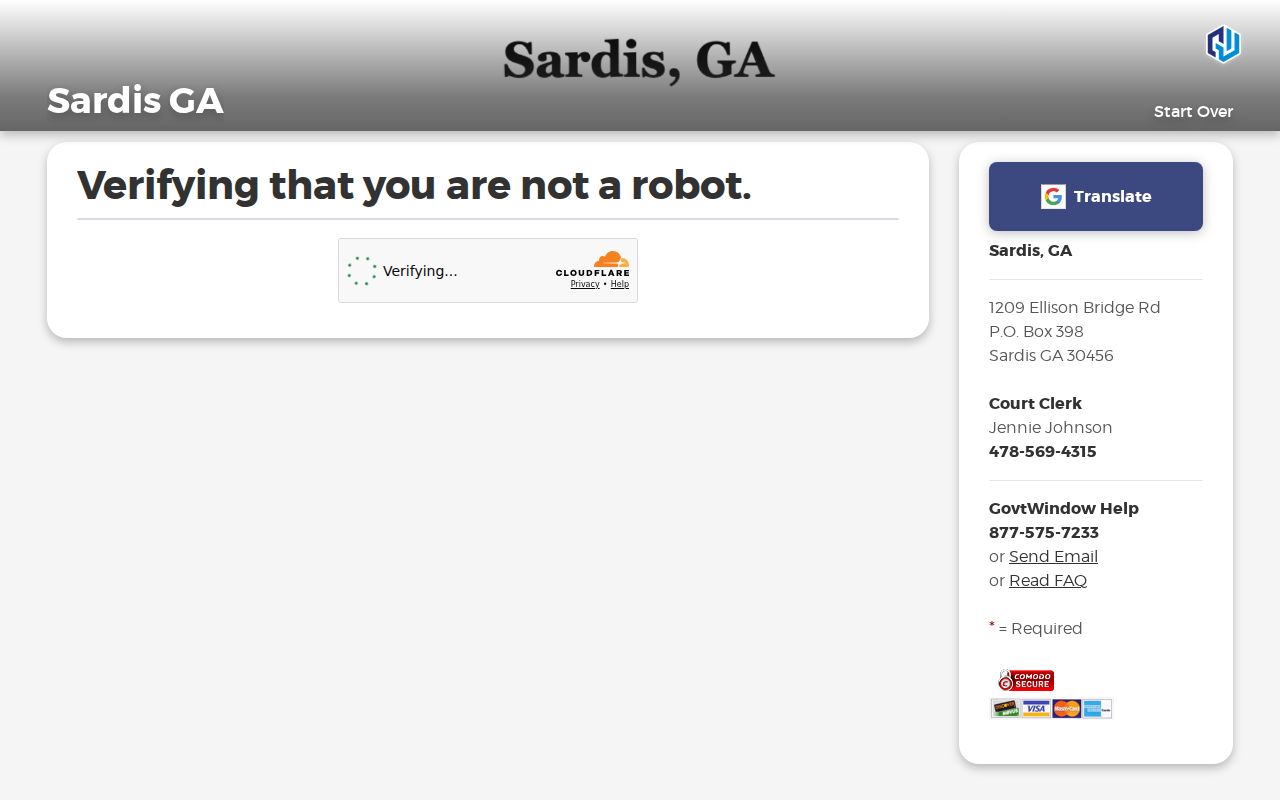
For a record check, contact the municipal clerk and ask for the docket and signed judgment. If the citation was transferred, bound over, or replaced by a county filing, use the Burke clerk. Never pay an amount merely to test whether a record exists; confirm the citation and court first.
How Sardis Records Reach the County
A city officer creates the first incident or arrest record. Custody adds a Burke jail booking. The municipal clerk records a city citation case, while county misdemeanors and felonies move to the Burke State or Superior Court clerk. GCIC receives reportable fingerprint and disposition data through official reporting. Each system updates on its own schedule.
Record flow: Sardis Police › Burke County Courts › Georgia Bureau of Investigation, Georgia Crime Information Center
Use police for the event narrative, jail for custody, and court for the filed charge and outcome. GCIC is the proper statewide source for inspecting one's own Georgia history. Georgia Felon Search is narrower: it provides selected reported felony-conviction information for a fee and may omit misdemeanors, dismissals, reduced charges, reporting lag, or successful First Offender completion. It cannot replace a Sardis court disposition.
Sardis Record Data Limits
The 2020 Census counted 995 residents in Sardis, making small-agency statistics especially sensitive to participation and geography. FBI Crime Data Explorer figures must be selected for Sardis Police by agency and year. A blank or missing submission is not zero crime. Burke sheriff totals also cannot be relabeled as Sardis totals because the sheriff serves a larger and different area.
Crime counts are not person-level criminal records. They summarize reported agency data and do not reveal whether a specific arrest ended in a conviction. Use them only for local context, preserve the submission status, and avoid comparing partial years as if coverage were complete. A person search still requires the police, jail, court, or state channel tied to the record.
Sardis Records and Rail History
Sardis was once known as Frog Wallow and developed around a crossroads and rail connection. The city incorporated as Sardis in 1912 and grew with lumber activity. The rail segment was abandoned in 1962, and tracks were removed in 1964, while the old station and coal tower remain part of local history. These facts help distinguish Sardis from a generic county search.
Historical context does not establish modern criminal activity or change record custody. A family-history question may call for archival sources, while a current police report still belongs with the agency and a citation docket with the municipal clerk. Keep those purposes separate so an old newspaper mention is not treated as a present court record.
Sardis Record Access Rules
The Georgia Open Records Act provides access to existing agency records subject to lawful exemptions and response duties. Sardis may redact protected identifiers, juvenile or victim information, and exempt active-investigation material. Ask for nonexempt portions if a file contains protected content. Court files follow the clerk's judicial access process, even when the underlying police report can be requested from the city.
Key Statutes:
Georgia Open Records Act, O.C.G.A. § 50-18-70 et seq. governs access to city-agency records and applicable exemptions.
O.C.G.A. § 35-3-34 controls specified criminal-history dissemination.
O.C.G.A. § 35-3-37 governs restriction of qualifying arrest and charge information.
Record restriction and court sealing are not the same. Restriction limits qualifying GCIC dissemination, while sealing limits public court-file access. To correct a Sardis incident record, begin with the creating agency. To correct statewide identity or disposition data, follow GCIC correction procedures and obtain the certified court disposition when needed.